

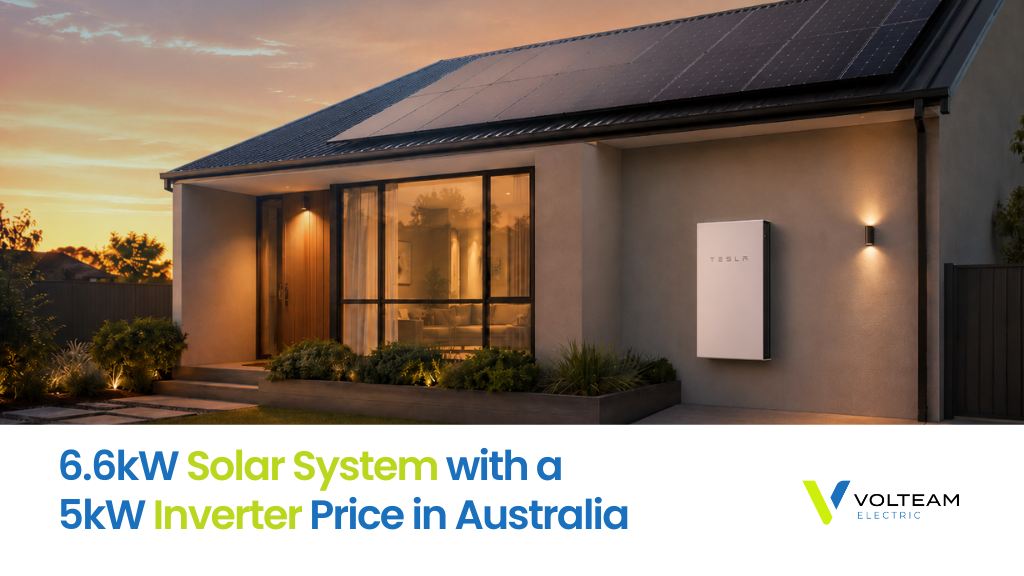
6.6kW Solar System with a 5kW Inverter Price in Australia
If you’ve started shopping for solar panel installation, you’ve probably noticed the same setup quoted again and again: a 6.6kW solar system paired with a 5kW inverter.
It’s the most common residential solar system in Australia, and in 2026 a fully installed 6.6kW system with a 5kW inverter typically costs around $5,000 to $8,500 before the federal rebate, depending on which solar panels and inverters you choose.
This guide explains why the pairing makes sense, what drives the price, how much the rebate takes off, and whether the size suits your home. It also covers adding a solar battery later, since that’s where most 6.6kW owners look next. All prices are estimates that vary by setup, so confirm the exact figure on a written quote.
Here’s how Volteam’s current 6.6kW packages compare side by side.
Why Pair 6.6kW Panels with a 5kW Inverter?
Putting 6.6kW of panels on a 5kW inverter looks odd, but there is a simple reason for it, and it works in your favour.
The Clean Energy Council (CEC) lets you oversize a solar array by up to 133% of the inverter’s capacity, so a 5kW inverter can legally carry up to 6.65kW of panels. On top of that, most single-phase homes have a 5kW export limit, so a 5kW inverter is pre-approved for grid connection on nearly every network without extra paperwork.
The pairing also gives you more usable power. Panels rarely hit their full rating in real conditions, so the extra capacity keeps the inverter working closer to its peak through the morning and afternoon.
You get more energy across the day for the cost of a smaller, cheaper inverter, which is why it remains the sweet spot for most households.
Compare 5kW Solar Inverters
The inverter is where two quotes for the same 6.6kW array start to diverge. It’s the part that turns what your panels make into power your house can use, and it’s usually the first thing a cheaper quote cuts back on.
Volteam installs 5kW inverters from Fronius and GoodWe. Both run from 5kW up to 10kW within the same family, so choosing one now doesn’t lock you out of a larger array later. Compare them below, or see how they sit against the rest of the range on our inverter comparison page.
| Product Specifications | ||
|---|---|---|
| Capacity | 450 W | 420 W |
| No. of Cells | 108 | 144 |
| Maximum Efficiency | 22.60% | 21.00% |
| Nominal Max. Power | 450 W | 420 W |
| Dimensions | 1757x1134x30mm | 1762 × 1134 × 30 mm |
| Warranty | 15-Year Product Warranty (Extendable to 25 Years) & 30-Year Performance Warranty | 25-year Product & 30-year Power Warranty |
| Certificates | EC 61215, IEC 61730, ISO 9001, ISO 14001, and ISO 45001 standards | ISO 9001: Quality Management System ISO 14001: Environmental Management System ISO14064: Greenhouse Gases Emissions Verification ISO45001: Occupational Health and Safety Management System |
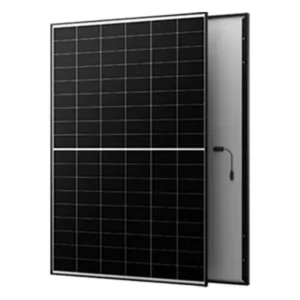
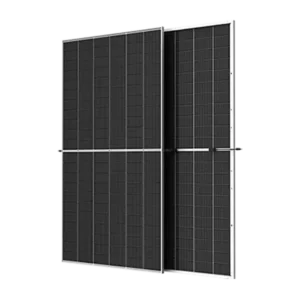
6.6kW Solar System with 5kW Inverter Price in Australia
As a guide, here is what a 6.6kW system with a 5kW inverter tends to cost in 2026. The federal rebate is applied at the point of sale, so the after-rebate figure is what most homeowners actually pay.
| System | Approx. price before rebate | Approx. price after rebate |
| 6.6kW solar + 5kW inverter (standard panels) | $5,000 to $6,500 | $3,300 to $4,800 |
| 6.6kW solar + 5kW inverter (premium panels and inverter) | $6,500 to $8,500 | $4,800 to $6,800 |
Prices are indicative and will vary. The main things that move the number are:
- Panel brand and quality. Value panels sit at the lower end. Premium panels cost more but often carry longer warranties and better output.
- Inverter brand. A budget inverter and a premium unit such as a Fronius or Sungrow can differ by well over a thousand dollars.
- Roof type and height. Tile, tin, and multi-storey roofs each affect install time and access.
- Installation complexity. Switchboard upgrades, longer cable runs, or a split array across roof faces all add cost.
Save $$$ with the Federal Solar Rebate
The federal rebate comes off your quote up front, not back at tax time. Your installer creates the Small-scale Technology Certificates (STCs) your system earns and discounts the price by what they’re worth on the day, so there’s nothing for you to claim.
Brisbane and South East Queensland sit in STC Zone 3, one of the better-rated zones for sunshine, so a 6.6kW system there is worth roughly $1,700 to $2,500 off the upfront cost in 2026. The scheme steps down each January and ends by 2030, so the discount gets a little smaller every year you wait.
See How Much You Save With a Rebate
Can You Add a Solar Battery Later?
Yes, and it is a common plan. Many 6.6kW systems are installed as battery-ready, meaning the inverter and switchboard are set up to make adding storage straightforward down the track.
Whether it is simple or needs extra work depends on your inverter. A hybrid inverter runs a battery directly, while a standard string inverter usually needs a separate battery inverter added alongside it. If storage is on your horizon, tell your installer up front so they can size the system for it.
A separate federal battery rebate now applies too, which brings the cost of adding storage down. Read the detail on our Cheaper Home Batteries Program guide, or browse options on our solar battery installation page.
Is a 6.6kW System Right for You?
A 6.6kW system is a strong fit for a typical Australian household. It generally suits you if you have:
- A 3 to 5 bedroom home with enough north, east, or west-facing roof space for the panels.
- Solid daytime electricity use, such as a pool pump, air conditioning, or someone home during the day.
- A household using roughly 20 to 30kWh of power per day.
A 6.6kW system produces around 24 to 28kWh on an average sunny day, which lines up well with that usage. If your bills are much higher, or you run heavy loads and an EV, look at a larger system. If your usage is lower or your roof is small, a 5kW system may suit better.
Not sure? The Volteam solar savings calculator gives you a quick estimate for your home.
Volteam’s Verdict on the 6.6kW and 5kW Pairing
A 6.6kW solar system with a 5kW inverter is popular because it works. It suits most Australian homes, it makes the most of the rebate, and the panel-to-inverter pairing squeezes more power out of a cheaper inverter.
In 2026, you are looking at roughly $3,300 to $6,800 after the rebate, depending on the gear you choose.
Volteam is a CEC-accredited Brisbane electrical contractor (QLD Electrical License #72286) installing 6.6kW systems across Brisbane and South East Queensland. See the full setup on our 6.6kW solar system page, or get a system sized for your home.
Get a free solar quote with Volteam or call 1300 865 832. You can also email info@volteam.com.au to talk through the right system size and inverter for your place.
Get a 6.6kW System Sized for Your Roof
Tell us your address and your average bill. We’ll check your roof space and your export
limit, apply the rebate to the quote, and give you a straight answer on whether 6.6kW is the
right size for your place.
Frequently Asked Questions
Why is the inverter only 5kW if the panels are 6.6kW?
Because the CEC lets you oversize panels up to 133% of the inverter’s capacity, and a 5kW inverter fits under most single-phase homes’ 5kW export limit. The extra panels keep the inverter working closer to full output through the day.
What is the price of a 6.6kW solar system with a 5kW inverter?
In 2026, expect roughly $5,000 to $8,500 installed before the rebate, or about $3,300 to $6,800 after the federal STC discount. Get a written quote to confirm your exact figure.
Is a 5kW inverter enough for a 6.6kW solar array?
Yes. This is a standard, CEC-compliant pairing. A little energy is clipped at peak midday output, but the extra morning and afternoon generation more than makes up for it.
Am I still eligible for the government rebate with a 6.6kW system?
Yes. A 6.6kW system qualifies for the federal STC rebate, applied as an upfront discount by your installer. In Brisbane and South East Queensland (STC Zone 3) it is worth roughly $1,700 to $2,500 in 2026.
What battery size suits a 6.6kW system?
Most homes with a 6.6kW system pair well with a battery in the 10kWh to 13kWh range, which covers a typical evening and overnight load. The right size depends on how much power you use after dark.