

Compare the Best Solar Inverters
Thinking about buying a solar inverter but don’t know which brand to go with? Use our handy comparison table to narrow down your choice. Compare specs, price, features, capacity, maximum efficiency, dimensions, warranty, and certificates across top brands like GoodWe, Fronius, and Sungrow. Once you’ve made your choice, book a free solar inverter installation quote.
| Product Specifications | |||
|---|---|---|---|
| Capacity | 33 kW | 5.0 kW | 3.0 kW |
| Maximum Efficiency | 98.60% | 97.70% | 97.60% |
| Dimensions | 702 × 595 × 310 mm | 415 × 511 × 175mm | 530 × 474 × 165 mm |
| Warranty | 10-year Parts & Labour Warranty | 10 years | 10-year Warranty |
| Certificates | IEC 62109, IEC 61727, IEC 62116, IEC 60068, IEC 61683, VDE-AR-N 4110:2018, VDE-AR-N 4120:2018, IEC 61000-6-3, EN 50549, AS/NZS 4777.2:2015, CEI 0-21, VDE 0126-1-1/A1 VFR 2014, UTE C15-712-1:2013, DEWA | IEC 61727:2004, IEC 62116:2014 | IEC 62109, IEC 62909, AS/NZS 4777.2, CEI 0-21, IEC 62116, IEC 61727, G98/G99, ABNT NBR 16149/16150 |


How to Choose the Best Solar Inverter in Australia
Most inverter choices come down to price, compatibility, your panel array, the local grid rules, and the wall space you have. Here are a few things to look out for when choosing a solar inverter.
Residential or Commercial Capacity
Capacity is measured in kilowatts (kW), which shows how much power a unit can handle at once. The Capacity row spans units from a 3kW Fronius Primo GEN24 to a 33kW Sungrow commercial model. A house needs an inverter matched to its panel array, so the system neither wastes output nor strains the unit. Warehouses and offices usually move up to the range covered in our commercial solar options.
Australian Grid Approval
Check for the certificate AS/NZS 4777.2, which is the Australian standard an inverter must meet before it can connect to the grid here. Check that it is listed before buying any unit, because a model without it won’t be approved for connection.
Mounting Space and Heat
The Dimensions row shows how much wall space each unit needs. Heat shortens an inverter’s life, so a shaded spot with good airflow, close to the meter box, matters as much as the model you choose. A wall out of the afternoon sun is the usual choice.
Popular Solar Inverter Comparisons
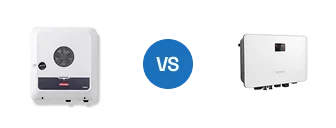
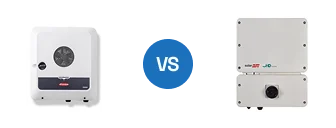
Weighing up Fronius vs Sungrow, or GoodWe vs Fronius? Compare popular inverter brands head-to-head below.

Inverter Installation and Replacement in Brisbane
Volteam installs new inverters and replaces ageing ones on existing systems, through our solar inverter installation service. A replacement starts with a look at what is on the wall now, so the new unit suits the array it will serve.
- Our electricians are licensed and Clean Energy Council (CEC) accredited.
- The site visit covers where the unit will hang, how the cables will run, and the meter box.
- Your written quote itemises the inverter, mounting, wiring, commissioning, and warranty terms.
- Faults on units still under warranty are diagnosed by the same team, who help get the claim moving.
Switchboard work, compliance paperwork, and notifying the electricity network are handled in-house too. Each unit is commissioned and set to the export limit your property is approved for, which is how much power it may send back to the grid.
Frequently Asked Questions
What's the difference between hybrid and standard inverters?
A standard (string) inverter converts the power your panels produce for the home, and whatever the home doesn't use goes out to the grid. A hybrid inverter does that and also charges a battery during the day, then draws it back down at night. Hybrids cost more upfront. See our guide to comparing solar batteries.
How does inverter efficiency affect savings?
The table's maximum efficiency figures run from 97.6% to 98.6%. That is the share of panel power reaching your home at the unit's best operating point. Small differences repeat every sunny day across the system's life, so they add up. Sizing and warranty matter as much, so weigh all three together.
How important is an inverter warranty?
Each unit in the table comes with 10 years of warranty cover. Inverters are usually replaced at least once during the life of the panels, so the cover is likely to matter. A local installer who handles claims makes that cover usable, because you aren't chasing the manufacturer alone.
What size inverter do I need?
An inverter is matched to the panel array. Arrays are often a little larger than the inverter, and a 6.6kW array with a 5kW inverter is a common Australian pairing. If you plan to add panels later, mention it when you request a quote so the inverter can be sized with room to grow.
Can I upgrade my inverter later?
Yes. Common reasons are adding panels beyond its capacity, or adding a battery to a unit that isn't hybrid. Inverters also get replaced when they reach the end of their life. A replacement must be notified to the electricity network and commissioned again before it runs.
Can I see what my inverter is producing?
Yes. The inverter's monitoring app shows what your panels generated, what the home used, and what went to the grid. Volteam connects it during installation, so the data is available from the day the system is switched on.
Which inverter brands does Volteam install?
We install top inverter brands, namely SolarEdge, Fronius, SMA, Sungrow, and GoodWe. You can compare these brands above in the comparison table, or give us a call to ask which one is best for you. You can also compare other product categories from the hub.
Need a New Inverter or a Replacement?
Share your system size and, for a replacement, the brand on your wall now. You’ll get a recommendation and a quote to match.