

Your Guide to Buying and Installing a Solar Battery for Your House
Maximising Australia’s sunlight exposure is not just about getting a good tan. The country’s abundance of sunshine is a big contributor to many people’s energy plans. But getting the most out of your solar investment is really about coupling your solar panels with a solar battery. Solar batteries are what allow for the storage of unused solar energy when the sun isn’t shining.
Buying a solar battery seems expensive, but thanks to the newly launched Cheaper Home Batteries Program, you can now buy a home battery system at 30% lower initial cost. Understanding how buying and installing a solar battery system for your home gives you advantages and can guide you to your full solar power potential.
How Many Solar Batteries Do You Need?
The number of solar batteries that are appropriate for your home installation depends on several parameters, such as your daily energy usage, battery capacity, and backup duration.
Daily Energy Usage
The first thing you should do is check your mean daily consumption on your electricity bill (kWh/day). A normal Australian household uses around 15 to 25 kWh a day according to CSIRO, but this will vary extensively depending on the number of people living in the house, heating/cooling equipment, appliances, and pool pumps. Your consumption will tell you how much power you will need to store and provide.
Battery Capacity
The figures on battery capacity can be confusing because of something called the Depth of Discharge (DoD). This is the percentage of your battery capacity that’s safe to use since you can’t use 100%. You should always be looking at usable kWh when buying a solar battery.
Backup Duration
Storage capacity is reflected in how long you want your essential circuits to run when a backup is required. This is especially important if you’re looking to cover yourself during a blackout. If you want to power your house for a day, you must have enough kWh available.
What Should You Look for in a Solar Battery?
Along with capacity, there are a couple of other things to look out for when buying a solar battery:
- Power Rating (kW): A low power rating may make it hard to power large appliances even if you have a high-capacity battery. Finding the right power rating means knowing your continuous and peak power ratings for seamless use.
- Warranty: Check the warranty that covers your battery in terms of capacity retention and the lifespan of your solar battery to ensure you’re getting good value for money.
- Battery Chemistry: Different batteries, including lithium-ion NMC or LFP, can determine the lifespan, thermal stability, DoD capability, and energy density.
- AC or DC Coupling: AC-coupled batteries can easily be added to existing solar systems and are generally more flexible. DC-coupled systems are slightly more efficient if you install a new solar and battery system, but are less adaptable for retrofits.
Does Location Impact Solar Battery Choice?
Where you’re living can determine which battery is best for you, and here’s why:
Climate
If you live in areas like Melbourne or Hobart, your annual solar production will be lower, meaning you’ll require a bigger solar system to charge your battery throughout the year. On the other hand, battery life can be shortened in extreme heat. This means keeping it cool in a particularly hot region and monitoring the ambient temperature range to ensure compatibility.
Rebates
Knowing your rebates is important since they can often be region-specific. For example, Victoria has their own solar battery loans through Solar Victoria, while Western Australia has a specific battery loan scheme with its own parameters.
Electricity Tariffs
Some regions like WA, SA, and QLD have ‘solar sponge’ electricity plans. These allow you to charge from the grid at a lower cost on low solar days to boost your battery payback. While they’re currently only available in the above areas, they’re likely to appear in more states in the future.
The Cost of Solar Batteries for Homes
Current prices vary, but solar batteries typically cost in the range of $800 to $1,500 per kilowatt-hour of usable capacity. On a 10kWh solar house battery system, that would be around $8,000 to $15,000. This might be expensive, but it can ultimately lead to reduced bills and more energy security.
A solar battery is crucial for reducing your power bill during peak periods. This works by storing extra solar energy during daylight and deploying it when the grid rates can hit 30–50¢/kWh. Relying on solar energy during these periods can help households save 60-80% as electricity prices continue to rise across the country.
How Do I Install a Solar Battery?
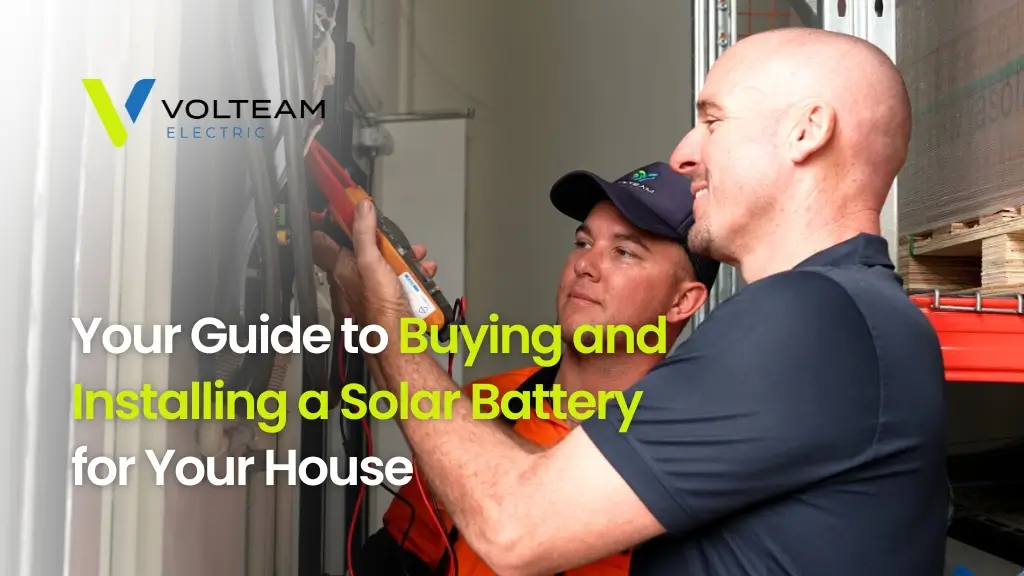
Installing a solar battery requires precision and planning, compliance with Australian standards, and a licensed electrician. This can add a quote of $2,000 to your solar battery or $3,000 for complex installations that require extras like longer cable runs or fireproof backing.
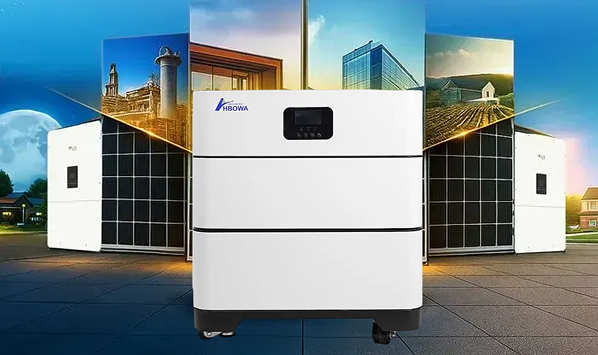
Solar batteries must be mounted securely on a wall or solid surface and connected to an inverter. It needs to be seamlessly integrated with your solar panel to ensure safety and performance.
The Australian Standard AS5139 also dictates the location of your solar battery. This means you can’t place a battery too close to a window, under the floor of a habitable room, or on a wall that’s shared with a habitable room without a ‘non-combustible’ barrier.
Understanding the Importance of Solar Batteries
Knowing the price of your solar batteries relies on knowing the consumption of energy, the desired backup time, and the capacity available. The average residence can manage with one or two new solar batteries for 10-20kWh.
Buying a high-quality solar battery can help you maximise your energy independence, providing backup power when you need it, and maximising your solar system so that you use as much clean energy as your panels can generate.
Talk to our experts today if you want to learn more about switching to solar or enhancing your current system. Volteam Electric offers personalised service for homes and businesses on par with industry standards. We provide support and guidance at every step of the solar panel process, including installation and maintenance, to set you up quickly and ensure your system is running at its peak.