


Compare Jinko vs Trina vs LONGi Solar Panels
When it comes to cost-effective solar panels, three solar brands stand out: Jinko, Trina, and LONGi. Compare these leading solar panel brands and their features, durability, warranty, and pricing. Pick the best for your budget and needs here, and get a free quote for solar panel installation in the Brisbane area.

Fill out your details and we'll call you back
Fill out your details and we'll call you back (1)
* indicates required fields
"*" indicates required fields
| Technical Specifications | |
|---|---|
| Capacity | |
| No. of Cells | |
| Maximum Efficiency | |
| Nominal Max. Power | |
| Dimensions | |
| Warranty | |
| Certificates |
Jinko Solar Panels Review
Starting its operations in 2006, Jinko’s Tiger Neo solar panel (JKM440N-54HL4R-V) is one of the brand’s most-purchased panels. The company’s guarantee of reliability and innovation is exactly what these panels represent, making them a popular choice in Australia.
This particular model is among the best solar panels in Australia because of its durability, thanks to the combination of Mono-facial technology and N-type technology. When it comes to performance and efficiency, N-type solar panels have been recognised as the better selection.
Jinko Solar Panels Features
- Super Multi BusBar (SMBB) Technology: An advanced photovoltaic (PV) technology where multiple thin copper, known as “busbars”, are used to connect the solar cells in a solar module. The more busbars in a single cell, the less power lost. Therefore, integration of the SMBB technology in Jinko solar panels only means higher light trapping and current collection, maximising power yield and energy efficiency.
- Potential-Induced Degradation (PID) Resistance: You know your investment is worthwhile when your solar panels are able to perform efficiently for many, many years to come. That’s why the PID Resistance feature in a solar panel is crucial, as it guarantees that your system functions optimally for a long time. Jinko’s solar panels ensure PID Resistance via optimised mass production and strict materials control.
- Hot 2.0 Technology: Jinko’s Hot 2.0 technology is a form of high-temperature resistant technology. This is used in N-type panels to reduce Light Induced Degradation (LID) and/or Light-enhanced Temperature Induced Degradation (LETID), a phenomenon that causes power loss.
- Enhanced Mechanical Load: Jinko’s Tiger Neo solar panels can resist harsh environmental conditions as they’re built to withstand high wind load (2400 Pascal) and snow load (5400 Pascal). With your solar panels doing the grunt work, you have to make sure they’re highly equipped to endure external challenges.
- Durability Against Extreme Environmental Conditions: The Tiger Neo panels are also designed with high salt mist and ammonia resistance, meaning they’re really built to last and be resilient in case of severe environmental conditions.
- Product & Performance Warranty: Offers a 25-year product warranty and a 30-year linear power warranty; only 0.4% annual degradation over 40 years.
Trina Solar Panels Review
Founded in 1997, Trina Solar is a widely favoured brand by Australian installers. In fact, it has once again been voted as the best-value solar panel in Australia by installers.
For such a cost-effective panel brand, it’s not a surprise that Trina constantly gets a commendation for being affordable, efficient, and reliable at the same time. Trina’s Vertex S+ solar panels, in particular, are a high-demand solar technology that combines value and performance.
Trina Solar Panels Features
- Enhanced Power Output: Delivering up to 445W, 22.3% module efficiency, and high-density interconnect technology to boot, Trina solar panels stand out by providing impressive power output despite their smaller size.
- Multi-Busbar Technology: Having several “busbars” ensures greater light trapping and enhanced current collection, all while decreasing series resistance and strengthening its reliability. This guarantees premium performance overall.
- Dual-Glass Design: The dual-glass design in Vertex S paves the way for a more secure and sustainable solar power system. During installation, the improved dual glass proves to be less prone to micro-cracks and scratches. It also employs a Class C fire rating with weather, salt spray, and ammonia resistance, ensuring your panels withstand severe external conditions.
- Super Low Degradation: The first-year degradation is only 1%, and only 0.4% annually moving forward.
- Product & Performance Warranty: Offers a 25-year product warranty and a 30-year power warranty.
- Universal Compatibility: Trina’s solar panels are seamless solar solutions ideal for both residential properties and commercial installations. They’re designed for smooth integration with existing mainstream inverters and a whole range of mounting systems. They’re also lightweight and compact, making them easier to handle and install.
- Mechanical Performance: Trina is built for performance and resilience, delivering mechanical performance of up to 5400 Pa positive load and 4000 Pa negative load.
LONGi Solar Panels Review
LONGi Solar entered the solar industry in 2000 with one goal in mind: to become the most valuable solar power technology in the world. As one of the world’s biggest manufacturers of monocrystalline silicon wafers, the company has since established itself as a technological leader in monocrystalline solar panels.
In Australia, LONGi is a top choice for homeowners and businesses alike for its continuous solar innovation while delivering affordable products, such as its best-selling LR4-72HBD solar panel.
LONGi Solar Panel Features
- Enhanced Compatibility: LONGi solar panels allow flexibility by being suitable for every type of installation, whether it be for ground power plants or large C&I projects.
- Advanced Module Technology: Delivering M6 Gallium-doped Wafer and 9-busbar Half-cut Cell, LONGi’s LR4-72HBD provides increased module efficiency for higher energy output. The use of Gallium-doped wafers also reduces light-induced degradation (LID).
- Bifacial Energy Output: Bifacial panels produce more energy as they’re able to capture sunlight from both sides, translating to additional solar production.
- High-Quality Module: As a leader in the production of monocrystalline solar panels, LONGi, of course, offers superior modules that ensure top-tier performance and long-term reliability.
- Sleek Design: Aesthetic-wise, LONGi stands out with its visually appealing panels and sleek, minimalist design that blends beautifully with various roof types.
- Product & Power Warranty: Offers a 12-year product warranty and a 30-year linear power warranty.
Get Your Solar Installation Quote
Free quote for solar panel installation in Brisbane and SE Queensland from CEC-accredited electricians.
Jinko vs Trina vs LONGi Verdict: Which is Best?
Jinko, Trina, and LONGi are some of the most efficient solar panels in Australia. They’re prominent choices among installers for their cost-effectiveness and exceptional performance paired with a reputable inverter brand. These companies are also constantly evolving in advanced solar technology, a crucial aspect of bringing solar power to more homes.
While they’re all excellent solar panel manufacturers, it all comes down to your specific needs and budget. If you’re all about performance and appearance, LONGi solar panels might suit your preference. If efficiency, durability, and affordability are top priorities, you may find Trina solar panels less daunting or Jinko’s products much more aligned with your needs.
If you need a solar installer to advise on what solar energy system is best for your home or business, contact Volteam at 1300 865 832. We’re here to help. Our team of solar experts is highly trained and fully licensed for installing solar panels in many parts of South East Queensland, from Surfers Paradise to Maroochydore.
You can also request a free quote online for details on pricing.
Frequently Asked Questions
Which is better: Jinko, Trina, or LONGi?
All three are excellent, reliable options, so it really comes down to what matters most to you. LONGi suits those looking for sleek looks and all-round performance. Trina is the installer’s favourite for value and reliability. Jinko is ideal if you want top efficiency and durability without blowing the budget.
What’s the difference between Jinko, Trina, and LONGi panels?
Jinko’s Tiger Neo panels use N-type tech for top efficiency and durability. Trina's Vertex S+ focuses on strong power output in a compact, dual-glass design. LONGi stands out with sleek aesthetics and flexible installation options, including bifacial models that capture sunlight from both sides.
Which brand offers the best warranty?
Jinko and Trina are neck and neck here, both offering a 25-year product warranty and 30-year linear power warranty, with minimal annual degradation. LONGi’s standard panel comes with a shorter 12-year product warranty, though it still carries the same solid 30-year linear power warranty.
Are these panels suitable for commercial use?
Yes, all three work well for commercial projects. Trina panels are designed for smooth integration with mainstream inverters and mounting systems, which suits bigger installations. LONGi offers flexibility across ground power plants and large commercial jobs, too. Your best fit depends on your site and energy needs.
How well do these panels handle Australian conditions?
Really well, since they’re designed for the exact weather and climate seen in Queensland and across the country. Jinko’s panels resist high wind, snow load, salt mist, and ammonia exposure, while Trina's dual-glass design withstands micro-cracks, scratches, and harsh weather and carries a Class C fire rating. All three brands are built tough enough for Aussie heat and coastal conditions.
Popular Batteries Comparisons
Compare solar batteries Australia with quick access to popular battery comparisons—use a battery compare chart to review performance, features, and compatibility at a glance, helping you choose the right system with confidence.
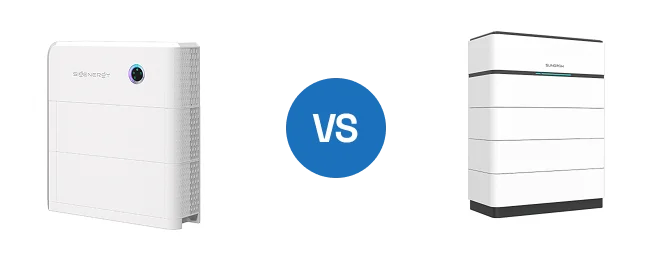
SIG Energy vs Sungrow
Sungrow vs GoodWe