

13kW Solar System with Battery Price: Complete Cost & Savings Guide
If your household is consistently burning through 40kWh or more of electricity every day – running anything from ducted air conditioning and a pool to a home office and even an EV in the driveway – a 13kW solar system paired with battery storage isn’t overkill. It’s probably exactly right.
The challenge you’re looking at here is that this configuration is also one of the most misquoted in the Australian solar market, with installed prices varying by $8,000 or more for what looks like the same system on paper.
We’ve put together the numbers in this guide. Worth noting here, too, that the federal Cheaper Home Batteries rebate can get you some significant upfront discounts. By the end of this article, you’ll know:
- What it should cost
- How much you could realistically save
- Whether a 13kW system is the right size for your situation
What Does a 13kW Solar System with Battery Include?
You’re not just sticking a few panels on your roof. It’ll be a lot easier to compare quotes properly and avoid being sold components that don’t suit your property if you know exactly what you’re in for with a 13kW solar system.
- Solar Panels: This 13kW figure you’re seeing refers to the total array capacity, not the inverter or battery. So it’s typically about 33-36 panels at 370W-415W each.
- Inverter: This turns the DC power from your panels into usable AC electricity. Your options here range from a single large inverter (12.5kW or 15kW) to two smaller units or Enphase microinverters fitted to each panel.
- Battery Storage: This is a separate component with its own capacity decision. Essentially, the solar array generates all your power and the remaining power you don’t use immediately is stored in the battery.
- Mounting Hardware: All the roof rails and fixings (tin, tile, or metal deck) you need to actually stick this equipment on your roof.
- Monitoring System: Any good system comes with a real-time app so you can track generation and battery state from your phone.
- Installation Labour: All the electrical work and switchboard connections involved.
13kW Solar System with Battery Price – Full Cost Breakdown
A fully installed 13kW solar system with battery storage will generally end up being somewhere between $18,000 and $32,000 AUD. Obviously, it all depends on the battery size and inverter type, as well as how complex the installation is.
What you do have, however, is the federal Cheaper Home Batteries rebate (approximately 30% off the battery component), so you’ll actually land somewhere between $16,000 and $28,000.
Let’s see how it could look in practice:
| Component | Budget Tier | Quality Mid-Range | Premium Tier | Notes |
| 13kW solar panels (supply) | $6,500 | $8,500 | $12,000 | Brand, wattage, warranty |
| Inverter (single or dual) | $1,800 | $3,000 | $5,000 | Fronius/SolarEdge premium; Sungrow/Goodwe mid |
| Battery – 10kWh (supply) | $5,500 | $8,000 | $11,000 | LFP standard; brand warranty tier |
| Battery – 20kWh (supply) | $9,500 | $13,000 | $17,000 | Modular or single unit |
| Installation labour | $3,000 | $4,000 | $6,000 | Complexity, location, 3-phase work |
| Switchboard upgrade (if needed) | – | $1,200 | $2,800 | Not always required |
| System monitoring/app | Included | Included | Included | Standard in 2026 installs |
| TOTAL – 13kW + 10kWh battery | $18,000 | $23,000 | $30,000 | Before rebate |
| TOTAL – 13kW + 20kWh battery | $24,000 | $30,000 | $40,000 | Before rebate |
| Cheaper Home Batteries rebate (battery only) | -$1,650 | -$2,400-$3,900 | -$3,300-$5,100 | ~30% of battery hardware cost |
Cost per Watt Benchmark: A $23,000 system/13,000W = $1.77/W all-in (including battery).
Any quality mid-range systems (for solar-only installs) should land at about $0.90-$1.40/W. Use this to sense-check any quote you receive.
You’d have to ask questions about panel quality and installer accreditation if someone’s given you a quote below $14,000 for a complete 13kW + battery system. Cheap installs routinely cut corners on inverter quality or use panels with reduced product warranties!
Always get at least 3 quotes from CEC-accredited installers.
Get a Free Solar System Quote with Volteam!
Best Battery Options to Pair with a 13kW Solar System
Your savings only start to get serious when you buy a battery to store some of the excess energy you’re not using to power your home during the day. Why would you want to buy the energy back from the grid in the evening, when you can store and use your own instead?
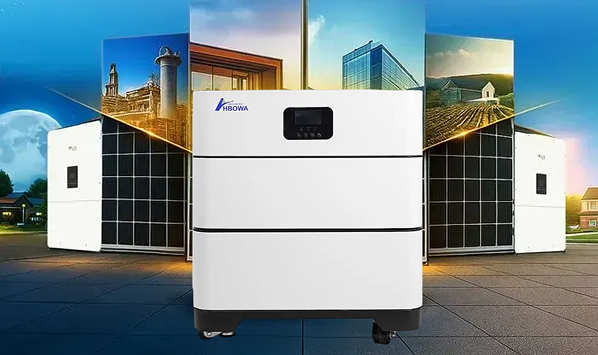
These are the most widely installed options – all use lithium iron phosphate (LFP) chemistry, which is the industry standard for home storage.
| Brand / Model | Capacity | Chemistry | Continuous Output | Warranty | Approx. Price (hardware only) |
| BYD Battery-Box Premium HVS | 10.2-22.1 kWh (modular) | LFP | 5 kW | 10 years | $8,000-$13,500 |
| Sungrow SBR HV Series | 9.6-25.6 kWh (modular) | LFP | 5 kW | 10 years | $7,500-$12,000 |
| Alpha-ESS Smile-B3 Plus | 10-20 kWh (modular) | LFP | 5 kW | 10 years | $8,000-$12,500 |
| Tesla Powerwall 3 | 13.5 kWh | LFP | 11.5 kW | 10 years | $12,000-$15,000 |
| Enphase IQ Battery 5P | 5-25 kWh (modular) | LFP | 3.84 kW per unit | 15 years | $6,500-$16,000 |
If you’re interested in the Enphase battery listed above, just keep in mind that the IQ Battery 5P requires Enphase IQ8 microinverters and is incompatible with most string inverter installations.
So, if you’re pairing with a Fronius or Sungrow string inverter, for instance, the BYD or Sungrow SBR series are the natural fit.
Compare Solar Products at Volteam!
Government Rebates & Incentives
There are a handful of different incentives at your disposal here, so the upfront costs aren’t as expensive as you might think.
Federal: Cheaper Home Batteries Program
The Cheaper Home Batteries Program launched on the 1st of July 2025 through the Small-scale Technology Certificates (STC) mechanism, which is the same proven system used for solar panels for over a decade.
There’s no application form or waiting period. Your installer applies the discount directly to your invoice.
Eligibility Requirements:
- Must pair with a new or existing solar PV system
- Battery must be on the CEC-approved products list (all the batteries we listed in the above table are) and between 5kWh and 100kWh capacity (subsidy applies to the first 50kWh)
- Must be installed by an SAA-accredited installer
- System must be VPP-capable (you don’t have to join a VPP, but the battery must support it)
- One claim per property
How the Rebate is Calculated (Step-by-Step):
- Choose a CEC-accredited installer and select an eligible battery from the approved products list
- Your installer calculates your STC entitlement based on battery usable capacity and your STC Zone
- STCs are assigned to the installer or a clearing house at point of sale
- The value of the STCs is applied as an upfront discount, so that’s a direct reduction on your invoice
- You pay the net amount.
- For a 13kW + 20kWh system, this typically saves $2,800-$5,100 AUD upfront
Just keep in mind that the rebate steps down every six months. The 1st of May 2026 reduction has already taken effect, where the STC factor dropped from 8.4 to 6.8 and reduced the effective rebate per kWh by approximately 19%.
The next step-down is scheduled for January 2027, so for your typical $30,000 system, acting before the next reduction could be worth $500-$900! There’s really no strategic reason to wait – battery prices are not expected to fall enough to offset the phasedown.
State Rebate Programs
Several programs that were active as recently as 2024 have now closed, but there are still a range of good incentives available:
- NSW: The Peak Demand Reduction Scheme (PDRS) VPP incentive is still active, and it’s worth up to $1,500 for eligible households who connect their battery to a registered VPP. Stacks with the federal rebate, too.
- WA: The Residential Battery Scheme offers up to $5,000 (Synergy customers) or $7,500 (Horizon Power customers) and stacks with the federal program. You need to enroll with VPP, however.
- ACT: The Sustainable Household Scheme offers low-interest loans of up to $15,000 repayable over 10 years. Stacks with the federal rebate.
In most cases, federal and state incentives can be combined – but the sequencing of how you do it matters, which is why you should ask your CEC-accredited installer about the correct process for your state.
How Much Can You Actually Save?
Again, your specific savings will depend on everything from your usage and tariff type to battery size and how well the system is configured. But here are a few realistic scenarios based on average grid tariffs of 28-35c/kWh and feed-in tariffs of 3-6c/kWh:
| Household Profile | Daily Usage | Solar + Battery Config | Est. Annual Saving | Payback Period |
| Large family, ToU tariff, Brisbane | 52 kWh/day | 13kW + 20kWh | $4,800-$5,500 | 5-6 years |
| Family of 4, flat tariff, Sydney | 38 kWh/day | 13kW + 15kWh | $3,200-$4,000 | 6-7 years |
| Family of 4, flat tariff, Melbourne | 35 kWh/day | 13kW + 10kWh | $2,600-$3,200 | 7-8 years |
| Small business, daytime load, Adelaide | 45 kWh/day | 13kW + 10kWh | $3,800-$4,600 | 5-6 years |
| Modest home, low usage | 22 kWh/day | 13kW + 10kWh | $1,800-$2,400 | 9-11 years |
It’s worth noting that Time-of-Use (ToU) tariffs can massively improve your battery ROI. We’d recommend switching before or at the time of battery installation if your retailer offers ToU pricing – charging the battery during off-peak (11c/kWh) and avoiding peak grid draw (34c/kWh) can add $800-$1,200/year to your savings figure.
Additionally, VPP participation can add $150-$400/year in additional credits through programs offered by Origin and other retailers. It takes barely any effort and doesn’t compromise your battery’s availability for your own home!
Before we leave you, keep in mind that the biggest mistake people make is going too small. A 10kWh battery on a 13kW system in a 50kWh/day household will run flat by 10pm every night. So if you tend to use a lot in the evening, go 20kWh. You’ll generally recover the $2,500-$4,000 upfront difference in about 2-3 years.
Use our solar savings calculator to model your specific household!