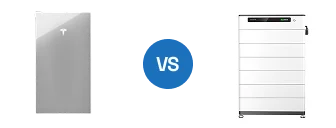




Compare Sigenergy SigenStor vs Tesla Powerwall 3
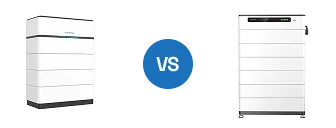
Solar tech doesn’t come much better than these two. Sigenergy and Tesla are two top solar brands, and their solar battery and inverter products – the SigenStor and Powerwall 3 – are the pick of the bunch. But which one is better for your home? Compare Sigenergy vs Tesla here and see price, features, warranty, specs, and more.

Fill out your details and we'll call you back
* indicates required fields
"*" indicates required fields
| Technical Specifications | |
|---|---|
| Battery Type | |
| Usable Capacity | |
| Modules | |
| Voltage Range | |
| Dimensions (HxWxD) | |
| Efficiency | |
| Peak Power | |
| Weight | |
| Parallel Operations | |
| Nominal Power | |
| Warranty | |
| Certificates |
Sungrow Battery Review: Affordable Solar Storage
Sungrow is a Chinese company that started operating in 1997. With nearly three decades of market-leading products, their solar batteries are widely considered reliable and cost-effective. Sungrow solar batteries are perfect for first-time energy storage users who want their own home energy systems but don’t want to spend too much on their home solar system.
For the Sungrow battery specs and size, here’s what to remember:
- The capacity for each Sungrow battery module is 3.2kWh.
- Its battery storage can be equipped with up to eight battery modules, bringing the total capacity to 25.6kWh.
- Sungrow’s modularity offers flexible options, allowing you to easily tailor the battery size to your specific energy needs.
Sigenergy vs Tesla Powerwall 3: Overview
Here’s a quick look at how the two solar batteries compare at a glance:
Compare Sigenergy vs Tesla Features & Specs
Energy Efficiency & Conversion Losses
Every time solar power is converted, from DC to AC or back, some energy is lost. That’s why system design matters. In DC-coupled systems (where power from solar panels goes directly to the battery before being converted for home use), there is higher efficiency, while AC-coupled systems (where power is converted to AC first, then back to DC to store) are slightly less efficient due to multiple conversion steps.
Both solar batteries are DC-coupled and have similar efficiency ratings:
- Powerwall 3 Efficiency: ~97.5%
- SigenStor Efficiency: ~98%
Backup Power & Blackout Protection
Powerwall 3
- Best suited for single-phase homes
- In three-phase homes, it only backs up one phase (additional inverters needed for full coverage)
- Features Storm Watch, which charges the battery before forecasted weather events
SigenStor
- Offers full three-phase backup
- Available for both single- and three-phase homes
- Compatible with backup generators for added reliability
If your home has a three-phase connection and you want full-home blackout protection, SigenStor is the superior option.
Battery Capacity & Scalability
Not all homes have the same energy needs, and those needs may grow over time. Here’s how these two batteries compare when it comes to flexibility:
Tesla Powerwall 3
- Fixed 13.5kWh capacity per unit
- Stackable up to 4 units (54kWh)
Installation & Design
Tesla Powerwall 3
- Fully integrated design (battery and inverter in one housing)
- Minimalist, space-saving appearance
- Ideal for homeowners prioritising aesthetics
Sigenergy SigenStor
- Stackable system (inverter sits on top of modular batteries)
- Slightly larger footprint depending on configuration
- Practical, industrial design suited to larger systems
While the Powerwall may win on visual design, the SigenStor makes up for it in adaptability and capacity.
Real-Time Monitoring & Smart Features
Tesla App
- Real-time tracking of energy production, usage, and storage
- Sleek, intuitive interface
- Integrates with Tesla EV chargers and solar systems
Warranty & Durability
Tesla Powerwall 3
- 10-year warranty
- Maintains 70% of original capacity over that period
- ~4,000–6,000 cycles
Sigenergy SigenStor
Sigenergy App
- 10-year warranty
- Cycle life: up to 8,000 cycles (varies by model and usage)
- Uses lithium iron phosphate (LiFePO₄) chemistry, stable and long-lasting
SigenStor may edge out Tesla in cycle life and long-term performance, especially for heavy users.
Get Your Free Battery Installation Quote
Quick, reliable, affordable solar battery installation from local Brisbane electricians.
Price Comparison: Sigenergy vs Tesla Powerwall 3
Many people’s ultimate question is: “What costs more, a Sigenergy battery or a Tesla battery?” Budget is a big factor when buying solar batteries and inverters, and while these two are more costly than others on the market, it’s because they combine solar battery and inverters into one piece of kit, which makes it more cost-effective.
- The Tesla Powerwall 3 costs approximately $13,600 AUD (excluding installation).
- The Sigenergy SigenStor price varies based on configuration. Its 8kWh starting price is the most affordable, whereas larger systems will cost more but offer far greater capacity.
SigenStor is the more affordable and scalable option upfront, especially for homes with three-phase power or commercial needs.
Sigenergy vs Tesla Powerwall 3: Final Verdict
Both the Tesla Powerwall 3 and Sigenergy SigenStor are reliable, future-ready solar battery systems. Your decision comes down to how much flexibility, capacity, and backup coverage you need.
Choose Tesla Powerwall 3 if:
- You’re in a single-phase home
- You value sleek design and tight integration with Tesla products
- You want reliable backup without planning future expansion
Choose Sigenergy if:
- You have a three-phase home and need full backup
- You want modular, scalable capacity
- You’re planning to expand your solar storage over time
At Volteam, we help Australian homeowners choose and install the right solar battery solution, backed by industry expertise and friendly, local support.
Interested in a free quote or consultation? Call us today.
Frequently Asked Questions
Which battery is better for Aussie homes, the Sigenergy or Tesla Powerwall 3?
Honestly, both are solid. Tesla’s sleek, easy to monitor, and works perfectly if you’ve got other Tesla products. Sigenergy’s modular, so you can scale it and control how you use your energy. If you want a budget-friendly, reliable option, Sigenergy’s great. If you like premium and plug-and-play, Tesla’s the way to go.
How much do these batteries cost?
Tesla Powerwall 3 starts around AUD 15,000. Sigenergy lets you pick how many modules you need, so you can adjust it to your budget — which is handy if you don’t want to spend more than necessary.
Can Sigenergy and Tesla batteries keep the lights on during a blackout?
Yep! Tesla can automatically power your whole home. Sigenergy can too, and you can choose whether it powers just essentials or the whole house — whatever suits you.
Are they eligible for Australian solar rebates?
Yes! Both can get the federal solar battery rebate, saving you a fair chunk. Some states also have extra programs, so check what’s available where you live.
How do I pick between Sigenergy and Tesla?
Think about your energy needs, your budget, and how much control you want. Want a simple, premium setup? Tesla. Want flexibility and growth potential? Sigenergy. Chat with an installer like Volteam — they’ll help you figure out what works best.
Popular Batteries Comparisons
Compare solar batteries Australia with quick access to popular battery comparisons—use a battery compare chart to review performance, features, and compatibility at a glance, helping you choose the right system with confidence.
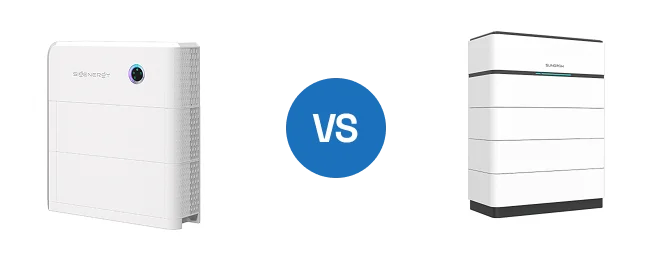
SIG Energy vs Sungrow
Sungrow vs GoodWe