

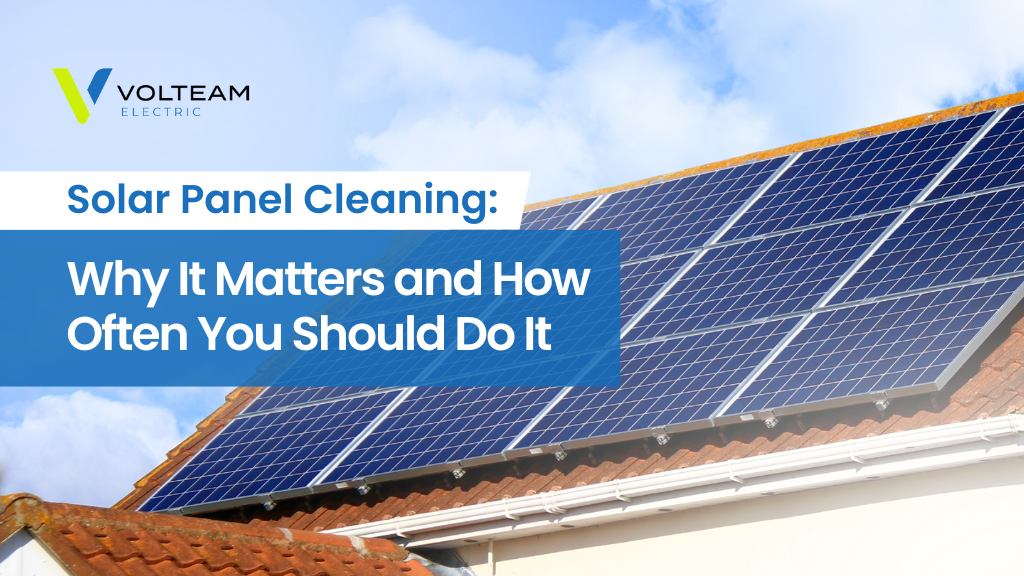
Solar Panel Cleaning: Why It Matters and How Often You Should Do It
Your power bill is creeping back up, but nothing about your system has changed. No new appliances, no faults flagged in the app, just a little less solar than last year. Before you blame the inverter or the weather, look up. A thin layer of dust, pollen, and bird droppings on the glass is one of the most common reasons a healthy solar system quietly underperforms.
Here is the honest version, which you will not always get from a company that sells cleaning: your panels probably do not need scrubbing every month, and rain does part of the job for free. But in South East Queensland, “set and forget” is not the full answer either. This guide covers why solar panel cleaning matters, how often you actually need it here in Brisbane, and how to decide between doing it yourself and booking a professional.
Why Solar Panel Cleaning Matters
Solar panels make power by letting sunlight reach the cells under the glass. Anything sitting on that glass blocks light, and less light means less electricity. It is that simple.
When dust, pollen, salt, and bird droppings build up, the panel cannot absorb as much sun as it did on day one. Heavily soiled panels can lose up to around 20% of their output, and in dusty, low-rainfall conditions some systems lose even more before anyone notices. The loss is rarely dramatic week to week. It creeps, which is exactly why it slips past most owners until the bill shows up.
That lost output costs you twice. You buy more power from the grid at retail rates, and you export less to earn your feed-in tariff. On a typical home system the gap is modest. On a larger home array or a commercial system, even a 10 to 15% drop can add up to real money across a year.
There is a longer-term reason too. Bird droppings and bonded organic grime are acidic and can create hot spots on the cells if left for months. Panels are built to last 20 to 30 years, and keeping the glass clean is part of protecting that investment.
Do Solar Panels Really Need Cleaning? The Honest Answer
You may have read that cleaning is a waste of money. Some studies have found that the boost from washing panels is small, and that a season of light grime costs only a few per cent. Both things can be true at once, so here is how to think about it without the sales spin.
Cleaning is worth it when the dirt is the kind rain will not remove, and when the lost output is enough to outweigh the cost of the clean. That is the whole test. It depends far more on your roof and your local conditions than on a national average.
A few situations make cleaning clearly worthwhile:
- You have trees nearby that drop leaves, sap, or attract birds
- Your panels sit at a low tilt (under about 10 degrees), where dirt settles instead of washing off
- You are in a dusty or high-pollen pocket, or near construction
- Your monitoring app shows output sliding with no other cause
- You run a larger home or commercial system, where even small percentages are worth recovering
If your panels are steeply tilted, rain is regular, and your output looks healthy, you can clean less often and still be fine. The goal is the right amount of cleaning, not the most.
Does Rain Clean Solar Panels?
Partly, and this is where a lot of owners get caught out. Rain rinses off loose surface dust, but it does not do a thorough clean. A light shower, which is the more common event for much of the year, can actually make things worse by turning dust into a muddy film that dries onto the glass.
More importantly, rain does almost nothing to the deposits that hurt output most: dried bird droppings, hardened pollen, sap, lichen, and salt residue. Those bond to the glass and need water and a soft touch to remove. So while rain helps, treating it as your only cleaning method is a slow way to lose a few per cent every year.
How Often Should You Clean Solar Panels?
For most South East Queensland homes, once or twice a year is the right baseline. From there you adjust up or down based on what is actually landing on your roof.
Use this as a starting guide:
| Your situation | Suggested cleaning frequency |
| Standard suburban roof, regular rain, decent tilt | Once a year |
| Trees nearby, frequent birds, or low panel tilt | Twice a year |
| Near the coast (salt), heavy pollen, or dusty area | Every 3 to 6 months |
| After bushfire smoke, a big dust event, or major storm grime | As needed, on top of the routine |
| Commercial or large rooftop array | Scheduled, usually 2 to 4 times a year |
The simplest habit is to let your monitoring tell you. If production on clear days drifts down compared with the same season last year, and the panels look dirty, that is your signal. The panels themselves, plus the app, are a better guide than any fixed calendar rule.
What Makes Solar Panels Dirty in South East Queensland
Brisbane and the wider SEQ region throw a specific mix at your roof, which is why generic advice only gets you so far.
- Pollen and tree debris. The subtropical climate means long growing seasons and plenty of leaf litter, sap, and pollen, especially if you have gums or other trees nearby.
- Bird droppings. SEQ has heavy bird activity, and droppings are one of the worst offenders because they are concentrated, acidic, and block whole sections of a panel.
- Salt residue. If you are in a bayside suburb, airborne salt settles on the glass and attracts more grime.
- Dust and storm grime. Dry spells leave dust, and summer storms can splatter a roof with dirt that dries into a film.
- Bushfire ash and smoke. During smoke events, fine ash settles across panels and can noticeably cut output until it is washed off.
None of this is cause for alarm. It is simply why a roof in Brisbane benefits from a periodic check that a roof in a wetter, cleaner climate might not.
How to Clean Solar Panels Safely
If your panels are easy to reach and only lightly dirty, a careful DIY clean is reasonable. The method matters more than the effort.
What works:
- Clean early morning or late afternoon, when panels are cool. Cold water on hot glass can crack it.
- Use plain water first. For stubborn spots, a little mild soapy water and a soft brush or sponge on a pole.
- Finish with deionised or low-mineral water if you can, so you do not leave mineral spots as it dries.
- Rinse gently. Let water and a soft touch do the work.
What to avoid:
- No pressure washers. High pressure can force water past the seals and damage the panel.
- No harsh chemicals, detergents, or abrasive pads. These can scratch the anti-reflective coating and may void your panel warranty.
- No metal scrapers for bird droppings. Soak and wipe instead.
How to Clean Solar Panels on the Roof, and When Not To
Here is the part most DIY guides skip. The biggest risk with solar panel cleaning is not the panels, it is the roof. Wet panels and tiles are slippery, and a fall from a roof is serious.
Clean from the ground with an extendable pole and brush wherever you can. Do not climb onto the roof to reach panels unless you have proper height-safety equipment and the experience to use it. If your panels are on a second storey, a steep pitch, or you cannot reach them safely from a ladder, that is the point to stop and call a professional. No amount of recovered output is worth the risk.
DIY vs Professional Solar Panel Cleaning
For accessible, single-storey roofs with light grime, DIY is fine. Beyond that, a professional clean usually pays for itself in safety alone, and there is a difference in what you are actually buying.
| DIY cleaning | Professional cleaning | |
| Best for | Easy-reach, lightly soiled panels | High or steep roofs, large arrays, heavy grime |
| Safety | You carry the height risk | Trained, with proper height-safety gear |
| Equipment | Hose, soft brush, pole | Deionised water systems, soft-wash gear |
| Warranty risk | Higher if you use the wrong method | Methods designed to protect the coating |
| Extra value | Just the glass | Can include a system check |
That last row is the one worth pausing on. Volteam is a Clean Energy Council (CEC) accredited, licensed electrical contractor (QLD Electrical Licence #72286), not a window-cleaning service. So a professional clean can be paired with a proper [solar panel maintenance](/solar-panel-maintenance/) check of your connections, inverter, and isolators, not just the glass. A pure cleaning crew can wash a panel, but they cannot tell you if a connector is degrading or your inverter is throwing quiet faults.
You can book a professional solar panel clean for residential or commercial systems and have the same team that knows the wiring handle the whole job.
Commercial Solar Panel Cleaning
For businesses, the maths changes. A commercial array of 20kW, 35kW, or 100kW generates far more, so the dollar value of a 10 to 20% soiling loss is significant. On a large system, recovered output from a clean often dwarfs the cost of the service.
Commercial cleaning is also a different job from a home roof:
- Scale. Large rooftop and ground-mount arrays take systematic cleaning, not a quick once-over.
- Safety and compliance. Working at height on a commercial roof has strict requirements. This is not a job for the maintenance officer with a hose.
- Scheduling. Most businesses are best served by a scheduled cleaning program, two to four times a year, so output stays high and the cost is predictable.
- Reporting. A professional service can document output before and after, so you can see the return.
Because Volteam handles commercial solar installation as well as cleaning and maintenance, the same accredited team can keep a business array performing across its life, and flag electrical issues a cleaning contractor would miss. For multi-site or large single-site operators, a planned maintenance schedule is the practical way to protect a big solar investment.
How Much Does Solar Panel Cleaning Cost?
Pricing depends on system size, roof height, pitch, and how dirty the panels are, so treat these as approximate ranges that will vary:
- Small to medium home systems: around $100 to $200
- Larger homes (roughly 20+ panels): around $200 to $400
- Commercial arrays: quoted per site, based on size, access, and schedule
For an exact figure on your roof, the only accurate answer comes from a quote. A professional clean once or twice a year is a small cost against the output, and the panel warranty protection, it buys back.
Keep Your System Performing: Cleaning Plus Maintenance
Cleaning keeps the glass clear. Maintenance keeps the whole system healthy. The two work best together.
A preventative solar panel maintenance program checks the parts of your system you cannot see from the ground, the wiring, connectors, inverter, and mounting, and catches small issues before they become expensive faults. Paired with a regular clean, it is the most reliable way to make sure your solar panel installation delivers the savings it was sized for, year after year.
If you are not sure how much output you might be leaving on the table, run the numbers with the solar savings calculator, then book a clean and a system check in one visit.
Frequently Asked Questions
How often should you clean solar panels?
Once or twice a year suits most South East Queensland homes. Increase the frequency if you have trees or birds nearby, live near the coast, or have low-tilt panels. The best guide is your monitoring app: if clear-day output drifts down and the panels look dirty, it is time.
How do you clean solar panels?
Use plain or low-mineral water and a soft brush or sponge on an extendable pole, ideally early morning or late afternoon when the glass is cool. Avoid pressure washers, harsh chemicals, and abrasive pads, which can damage the panel or void the warranty. Clean from the ground wherever possible.
Does rain clean solar panels?
Only partly. Rain rinses off loose dust but leaves behind bird droppings, pollen, sap, and salt, and light rain can dry into a muddy film. Rain reduces how often you need to clean, but it does not replace a proper clean.
Is solar panel cleaning worth it?
Usually yes, if your panels collect the kind of grime rain will not shift, or if your output has slipped. The bigger your system, the more a clean pays back. If your panels are steeply tilted, rain is regular, and output looks healthy, you can clean less often.
Can I clean solar panels on the roof myself?
Only if you can reach them safely. Clean from the ground with a pole where you can, and do not climb onto a roof without proper height-safety gear and experience. For high, steep, or hard-to-reach panels, a professional clean is safer and protects your warranty.
How much does professional solar panel cleaning cost?
As a rough guide, around $100 to $200 for small to medium home systems and $200 to $400 for larger homes, with commercial arrays quoted per site. Prices vary with size, access, and condition, so get a quote for your system.
Ready to Get Your Panels Performing Again?
Clean panels are one of the cheapest ways to recover lost solar output, and the safest way to do it is with a team that knows the electrical system as well as the glass. Volteam is a CEC-accredited, licensed Brisbane electrical contractor, trusted by thousands of South East Queensland homes and businesses.
Get a quote for a professional residential or commercial clean, or to pair cleaning with a full system check.
Get my free quote or call 1300 865 832 to book your solar panel clean and maintenance check today.