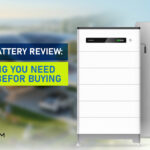


Sungrow Battery Review: Is It a Good Choice for Australian Homes?
As you’ve no doubt realised, your electricity bills are getting higher. It’s at a point where they’ve risen 37% in the 12 months to February 2026, over a third of what you were paying this time last year. The situation isn’t getting better, either, since the Australian Energy Regulator approved residential price hikes of up to 9.7% from July 2025.
Essentially, you’re well within your rights to start thinking about alternative options to keep prices down. We think a solar battery is one of those. They’re gaining a lot of traction, too, and we’re seeing battery storage go from nice-to-haves to something many homeowners are actively researching.
More importantly, you’re going to bump into loads of options on the market, so it’s worth doing your research here. Sungrow is one of the more popular ones, so how do they compare?
We’ve put together a Sungrow battery review, where we’ll walk through:
- What the batteries are like
- What they cost in Australia right now
- Whether one makes sense for your home
What is a Sungrow Battery?
Sungrow is a Chinese solar technology company that has been around since 1997 (which gives them a bit of credibility due to their longevity). They began as an inverter manufacturer, which is still the core of what they do – they’re the largest solar inverter manufacturer and account for about 40% of all new residential solar inverter installations in Australia.
So the market presence is there, but what it means is that spare parts exist, and local technicians properly know the product. The company isn’t going anywhere.
They got into the battery storage market in 2018, and their Australian residential lineup has been growing a lot – as you can see with how popular the brand is.
You’ll also be getting batteries that use Lithium Iron Phosphate (LFP) chemistry from Sungrow. That’s important because LFP is widely considered the safer and more heat-tolerant option compared to older NMC alternatives. Obviously, being in a country where summer temperatures can be brutal, and most of our batteries sit in garages or on exterior walls, is a key factor in why Sungrow is worthwhile.
Sungrow Battery Models Available in Australia
We’ve got two main series to choose from in Sungrow’s residential range:
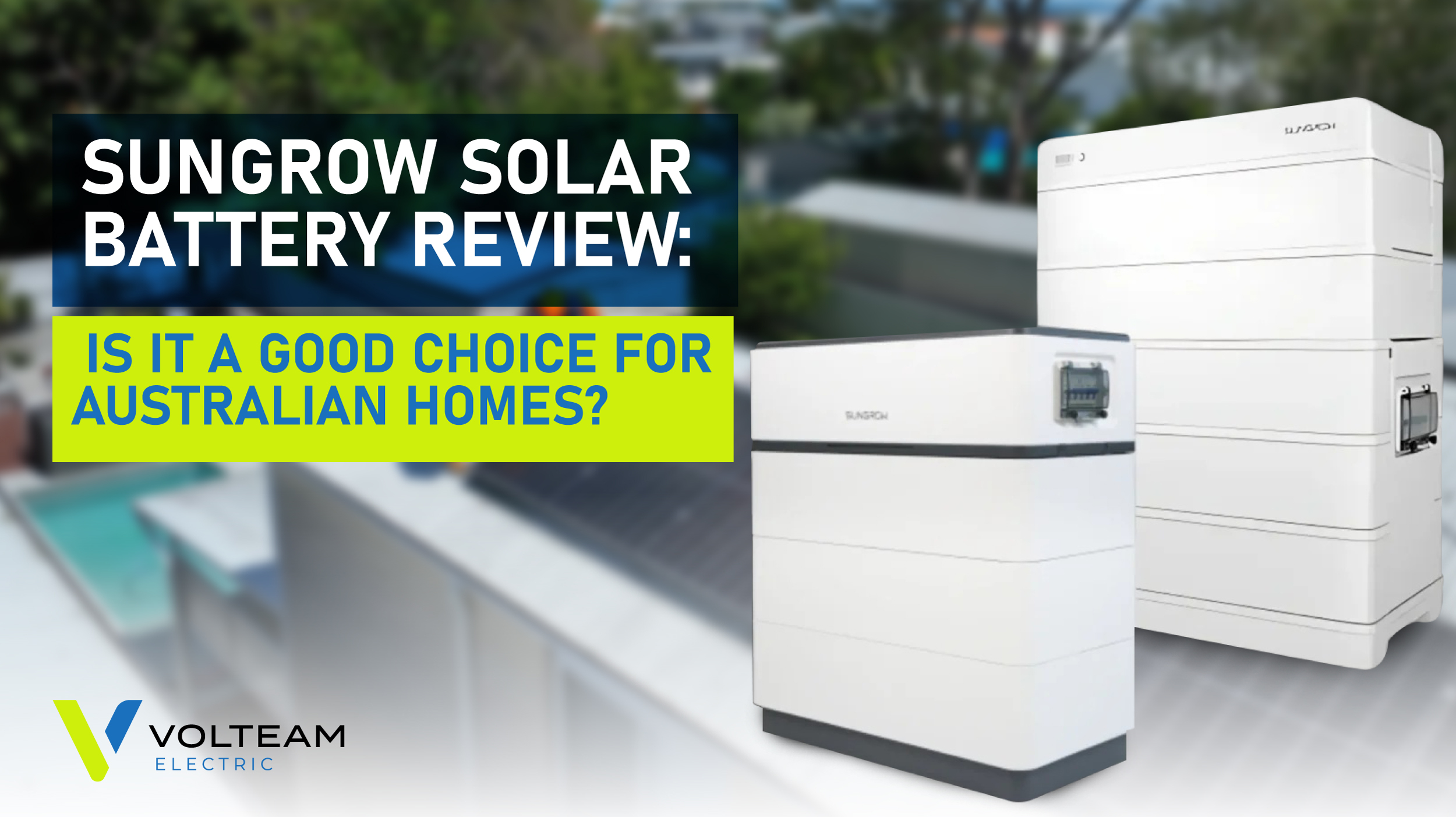
SBR Series
You’re best off with the SBR series if you’ve got a small or medium-sized house. It’s modular, and starts at 9.6 kWh and scales in 3.2 kWh increments up to 25.6 kWh.
The design is genuinely stackable – you can start with a 9.6 kWh system and add modules later if your needs grow, which is more flexible than most fixed-size competitors.
Aside from that, you’re getting up to 100% usable energy and a 10-year warranty, so we’d definitely recommend this if you’re looking for a slightly more affordable option.
SBH Series
The SBH series is the higher-voltage option out of the two and gives you much larger capacities (from 20 kWh up to 40 kWh).
It’s definitely better suited for larger homes or properties with significant overnight energy demands. For instance, they’d be a decent fit if you have an EV or multiple air conditioning units running through the evening.
And it’s worth noting that the SBR series is DC-coupled, which means it works nicely with Sungrow hybrid inverters. If you’re doing a combined solar-and-battery installation from scratch, this is a non-issue – and the Sungrow hybrid inverter plus SBR bundle is one of the most cost-effective packages available.
If you already have a non-Sungrow inverter, though, retrofitting will take a bit of additional planning.
Sungrow Battery Price Guide (2026)
Let’s get into the numbers:
Upfront Prices
The SBR series can range from $9,000 to $15,000 once installed. It mostly depends on the capacity you’re looking for, as well as your state and the installer.
A 9.6 kWh system would usually come in at around $8,000 to $9,500 installed, while the popular 12.8 kWh SBR128 would be a bit higher in that range.
On a per-kWh basis, you’re looking at roughly $350-$390 per usable kWh for the installed pricing, which is quite competitive for a battery with this level of warranty and build quality.
Factors Affecting Pricing
The federal Cheaper Home Batteries Program, which launched on the 1st of July 2025, gives you roughly a 30% discount on eligible battery systems. This is automatically applied to whatever accredited installer you buy from, so you get that reduced price in your quote and don’t have to claim it separately.
As of early 2026, that works out to around $300 per usable kWh, which means a 12.8 kWh install could take off about $3,840.
Now, it’s worth noting that a few upcoming changes to the rebate structure are taking effect from the 1st of May 2026. The per-kWh amount will be dropping, and there’ll be a tiered system that applies to larger batteries. So it’s definitely worth taking a look at sooner rather than later.
Return on Investment
In terms of ROI, your savings depend heavily on your energy usage and what you pay per kWh. Australian households currently pay between 24 and 43 cents per kWh, depending on their state and plan.
A battery that lets you shift your solar generation from a midday export of 2-3 cents back to your own home at night – instead of buying it back for 35 cents – definitely adds up.
Get a personalised battery quote from Volteam to understand what the numbers look like for your specific home and usage.
Key Features and Benefits
- Round-trip efficiency is about 97%, so little energy is lost in the charge-discharge cycle.
- The warranty is 10 years or 10,000 cycles to 80% retained capacity.
- The iSolarCloud app lets you monitor your system in real time – generation, battery charge level, grid imports, and exports.
Pros and Cons
Pros
- Modular design
- LFP chemistry
- Good price-per-kWh
Cons
- The SBR is inverter-specific so it won’t work with non-Sungrow inverters
- 10-year warranty is slightly shorter than some alternatives
Who Should Choose a Sungrow Battery?
Sungrow is best for budget-to-mid-range buyers who want reliability without a premium brand markup. We’d recommend it if you’re installing solar and battery together – pairing it with a Sungrow hybrid inverter gives you full system efficiency and makes the overall package hard to beat on value.
Got plans to scale your storage over time? You’ll appreciate the modular design, since starting at 9.6 kWh and adding capacity later is easy.
If backup power during blackouts is a priority for you, make sure backup functionality is enabled in the system design.
Learn more about Volteam’s solar battery installation services.
How it May Look in Practice
- System: 3-bed SE Queensland home, existing 6.6 kW solar, ~22 kWh/day usage
- Setup: Sungrow SBR128 (12.8 kWh) + SH8.0RS hybrid inverter
- Cost: ~$11,500 installed after federal rebate
- Savings: ~$1,400-$1,800/year in grid imports avoided
- Performance: Covers majority of evening load from stored solar; estimated payback 6-8 years
Why Choose Volteam?
The installation and ongoing support matter just as much as the right battery. Our installers at Volteam are fully accredited and experienced across the Sungrow range, so we’ll help with:
- Find the right model and capacity for your home
- Making sure you access every rebate you’re entitled to through the federal Cheaper Home Batteries Program
- Being there if anything needs attention down the track
Request your free battery quote here and we’ll walk you through the options without the sales pressure.
FAQs
Are Sungrow batteries reliable?
Sungrow batteries are reliable, as the solar technology company has been operating in Australia since 2012 and has a strong reputation among installers and homeowners alike. We’ve installed lots of Sungrow models across their whole range, so we’re confident installing them in any size. The LFP chemistry they use is also well-suited to Australian climate conditions.
How long do Sungrow batteries last?
The Sungrow SBR series comes with a 10-year warranty with a 10,000-cycle guarantee to 80% retained capacity. So, in practical terms, for a household cycling the battery once per day, that would mean that the warranty covers you well into the life of a typical solar system.
Is Sungrow a good brand in Australia?
Sungrow is the world’s largest inverter manufacturer and holds approximately 40% of new residential solar inverter installations in Australia. So with the foothold they have in the market, alongside the technical support and distributor networks, it definitely gives them an edge over some of their competitors.
Can I add more capacity to a Sungrow battery later?
Yes, you can add more capacity to a Sungrow battery later because the SBR series is modular by design. You can start at 9.6 kWh and add 3.2 kWh modules up to a maximum of 25.6 kWh per unit, and additional units can be connected for larger setups.
Do Sungrow batteries qualify for the federal rebate?
Sungrow SBR batteries installed by a CEC-accredited installer qualify for the federal Cheaper Home Batteries Program. Keep in mind that the rebate structure changes from the 1st of May 2026, so it’s worth getting a quote before then if you’re seriously considering it.
Contact Volteam today for a free consultation and quote!